
- May 29, 2026
- Posted by: Hussain Sidhique
- Categories: Blog, Loans
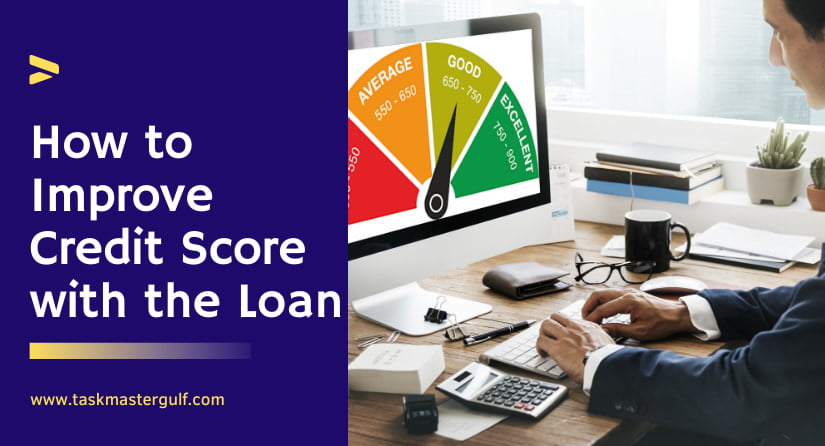
To improve credit score in UAE for better loan approvals, make all bill payments promptly, keep your credit card usage below 30%, and limit new loan or credit card applications. Constantly following these habits for more than 3 to 6 months is key to making a robust credit profile.
If you reside and work in the United Arab Emirates, you already understand that the financial market here moves quickly. Whether you’re seeking to purchase a stunning villa in Dubai, upgrade to a new car, or get a credit card to enjoy travel rewards, one primary aspect stands between you and your objectives – your credit score.
A lot of people think that obtaining a loan depends solely on a high salary. While your income is crucial, banks care only as much about how you manage money. That is where your credit score comes in. A better credit score proves you’re a responsible borrower, making it convenient for banks to provide you with the finest rates of interest.
Table of Contents
What is a Credit Score in the UAE?
Your credit score is a three-digit number that ranges from 300 to 900. It works as a financial report card. A higher number tells banks that you’re a secure person to lend money to, while a lower number indicates a higher risk of missed payments.
In the UAE, your credit score is tracked, calculated, and handled by a federal government unit called the AI Etihad Credit Bureau. The AECB daily gathers financial data from banks, telecom corporations, and utility providers in the Emirates to form your credit profile.
How Banks View Your Score
When you make an application for a loan or a credit card, the bank does not only guess your financial trustworthiness; they pull your AECB credit report to see precisely where you stand –
- 750 to 900 (Excellent) – You are a top-tier borrower. You will get quick approvals and the lowest possible rates of interest.
- 650 to 749 (Good/Very Good) – You have a robust history. Banks will happily give you standard loans and cards.
- 600 to 649 (Fair) – You can still get sanctioned, but you might face slightly higher rates of interest or stricter terms.
- 300 to 500 (Low/Poor) – Banks see you as a high-risk borrower. You may face instant rejections or have to look for specialized, costly loan options.
Check Credit Score UAE (Find Out Your Starting Point)
Before you can improve your score, you have to understand what it is. You can’t make a strategy without a baseline.
To check credit score UAE, you should go directly through the official AI Etihad Credit Bureau channels. The procedure is thoroughly digital, protected, and takes less than five minutes.
How to Get Your Report Online
- Download the App – Search for the AECB mobile app on the Apple App Store or Google Play Store. Optionally, visit the official website.
- Register with UAE Pass – The simplest method to log in is by utilizing your UAE Pass, which protects your identity.
- Choose Your Product – You can select to purchase only your three-digit Credit Score, or you can purchase the complete Credit Report.
- Pay the Fee – The Bureau charges a small fee.
- Review Instantly – Your report will be produced as a PDF that you can view right on your phone or computer.
Review your report carefully for mistakes. Make sure all listed credit cards and loans actually belong to you, and make sure that closed accounts are marked as closed. If you find a mistake, you can file a dispute directly through the AECB website to have it right.
The Best Strategies to Improve Credit Score in UAE
If you checked your score and it is lower than you expected, don’t panic. Your credit score is vibrant. It updates every month depending on your financial actions. By practicing good habits, you will see your score start to increase.
Here are the most useful, practical methods to boost your number –
1. Pay Every Single Bill on Time
Your payment history is the single biggest aspect impacting your credit score. Missing a payment by even a few days leaves a negative mark on your report.
- Set Up Auto-Debit – Configure your bank account to automatically pay at least the minimum amount due on your credit cards per month.
- Don’t Ignore Small Bills – In the United Arab Emirates, the AECB tracks non-banking bills, too. A forgotten, unpaid postpaid mobile bill or a late utility payment can actively pull your score down.
2. Lower Your Credit Utilization Ratio
Your credit usage ratio is a fancy term for how much of your available credit card limit you utilize per month. For instance, if you have a credit card with a limit of AED 20,000 and you spend AED 18,000 on it, your usage is 90%. Banks examine this as a sign of financial stress.
- Keep it Under 30% – To optimize your score, try to never utilize over 30% of your total credit limit. If your limit is AED 20,000, keep your operating balance below AED 6,000.
- Make Multiple Payments – If you have to make a large buy, repay that portion of the bill instantly instead of waiting for the end of the monthly billing cycle.
3. Keep Old Credit Cards Open
The length of your financial history matters. A card you have owned and handled responsibly for four years provides the bank more confidence than a brand-new card you opened last week. Even if you do not utilize an old credit card anymore, keep it open to show a long, stable history of credit management.
4. Limit New Credit Applications
Every time you fill out an application for a new loan or credit card, the banks make a hard inquiry into your AECB report. If you make an application to four distinct banks in the span of one week to see who provides you the finest offer, your report will present four quick inquiries. This makes you look desperate for cash, which drops your score. Rather, compare choices online first, select one provider, and make an application only when you are certain.
5. Reduce Your Total Debt Load
Your Debt Burden Ratio (DBR) is the percentage of your monthly salary that goes toward repaying debts. By the UAE Central Bank law, your DBR can’t exceed 50%. If you have hefty loan duties, concentrate on paying down your smallest balances first to clear out active accounts and provide your score breathing room.
Navigating Loan Options for a Low Credit Score
What occurs if you require a loan urgently, but your credit score is currently too bad to be eligible for a standard bank product? Obtaining a conventional personal loan with a score below 550 can be extremely difficult in the United Arab Emirates.
However, you still have different loan options for low credit score brackets if you find yourself in an emergency. Note that these alternatives come with particular demands or higher overall expenses –
1. Peer-to-Peer Lending Platforms – Regulated P2P platforms match individual borrowers directly with private investors. Because these platforms look at more than only your conventional credit score, usually assessing your employment sustainability, educational background, and technical footprint, they are sometimes more adaptable than conventional brick-and-mortar banks.
2. Salary Transfer loans – If you are keen to move your main income account to the bank giving the loan, your possibilities of approval enhance drastically. When your salary transfers directly into their system every month, the bank can automatically deduct the monthly loan installment before you have a chance to invest it. This direct control decreases their chance, making them more forgiving of a lower credit score.
3. Secured Loans – If you can’t get an unsecured personal loan, you can give protection to the bank. If you keep a certain deposit account or an investment portfolio with a bank, it can give you a loan against those particular assets. If you default on your payments, the bank just takes the money from your deposit, making it a zero-risk loan for them.
Why a High Credit Score Changes Your Financial Life
Enhancing your score demands discipline, but the long-term rewards in the UAE financial ecosystem make the effort thoroughly worthwhile.
| The Financial Benefit | Low Credit Score (Under 600) | High Credit Score (750+) |
| Loan Approvals | High risk of flat rejections or complex terms. | Fast-tracked, hassle-free online approvals. |
| Interest Rates | You will be forced to accept peak, expensive rates. | You can negotiate for the lowest market rates. |
| Credit Limits | Low limits that constrain your purchasing power. | High limits matching your financial lifestyle. |
| Premium Credit Cards | Applications rejected for top-tier rewards cards. | Easy access to luxury airport lounge access and airmiles. |
Conclusion
Establishing a good credit score in the UAE is not something that happens overnight; it’s a financial journey that takes patience and consistent daily decisions. Using the AECB app to check credit score UAE on a regular basis, paying off your bills before they become due, and avoiding unnecessary debt will gradually improve your rating to the “Good” and “Excellent” categories.
With a good credit profile, UAE banks will be fighting for your business, and you will have complete control over your financial future.
Read More – How To Check Credit Score in UAE


